Italy's Giorgia Meloni limits foreign pupils in schools and bans face coverings
Italy's right-wing government has passed rules to limit the number of foreign pupils at schools and ban face coverings, a move opponents said was designed to counter the growing appeal of a rival far-right party ahead of elections due next year. Prime Minister Giorgia Meloni is grappling with the rise of National Future, a party founded in February by former army general Roberto Vannacci and already polling at around 8 per cent, while surveys show her coalition trailing the centre-left bloc.
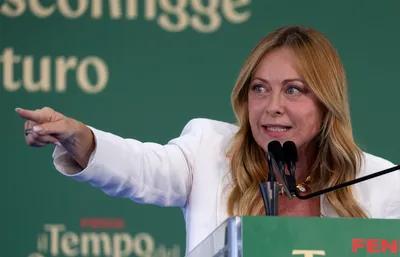
Italy's right-wing government has passed rules to limit the number of foreign pupils at schools and ban face coverings, a move opponents said was designed to counter the growing appeal of a rival far-right party ahead of elections due next year.
Prime Minister Giorgia Meloni is grappling with the rise of National Future, a party founded in February by former army general Roberto Vannacci and already polling at around 8 per cent, while surveys show her coalition trailing the centre-left bloc.
National Future has made schools a central battleground in its campaign advocating “remigration” – the deportation of foreigners to their countries of origin – and has argued that Islamic “contamination” in classrooms harms national identity.
From the 2027-28 school year, a 30 per cent cap will apply in primary school classrooms to pupils who are not Italian nationals and were not born in Italy, or who have attended fewer than two years of nursery school in the country, according to a draft decree passed on Thursday.
The decree also imposes fines of up to €1,000 ($1,137) on anyone entering school premises wearing face coverings.
“These are common-sense measures that do not divide people, but help foster genuine integration,” Ms Meloni posted on X after the cabinet approved the measures.
Ms Meloni, modern Italy's longest-serving leader , first unveiled the plans on Sunday at a rally of the youth wing of her Brothers of Italy party, where she also said parents of children who do not speak Italian will be required to attend language courses.
In what appears to be part of a broader push to rally support for the coalition before the 2027 election, Ms Meloni last week also announced a partial roll-back of the unpopular road tax.
The schools measures have sparked concern among principals, who say they will be difficult to enforce in areas with large immigrant populations, particularly in northern Italy.
If demand exceeds the 30 per cent cap, education authorities will have to redistribute pupils among nearby schools, taking into account family needs and access to education, the draft said, without specifying how that would be done in practice.
President Sergio Mattarella, who has to sign off on the decree, said this week that he is wary of any barriers being placed on education.
According to the ISMU Foundation think tank, around 900,000 foreign students attend Italian schools, accounting for 11.6 per cent of the total student population. About 43 per cent come from other European countries, while 32 per cent have African backgrounds.
Opposition politicians have accused Ms Meloni of prioritising culture-war politics over the interests of students and schools.
“It is a shameful decree that seeks to hide the government's inability to address the real problems of the public school system behind a new ideological banner,” said Elly Schlein, the leader of the centre-left Democratic Party.
Immigration is politically sensitive in Italy, but the share of immigrants in the population remains lower than in several comparable European countries. It stood at about 12 per cent in 2025, compared with 21 per cent in Germany and 19 per cent in Spain, Rockwool Foundation data shows.