EU opens door for Canada to become its first associate member after clashes with Trump
Prime Minister Mark Carney said Canada was seeking a ‘unique alliance’ with the EU – but not membership
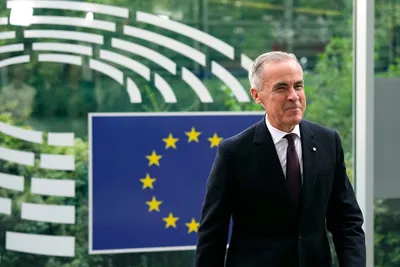
The EU has opened the door for Canada to become its first “ associate member ”, as Ottawa’s relationship with Washington continues to deteriorate.
Ties between traditional allies Canada and the United States have strained under Donald Trump, after the president threatened to make the country the 51st American state and imposed hefty tariffs on Canadian goods.
Without mentioning Trump, European Commission President Ursula von der Leyen highlighted the benefits of closer ties with Canada in her annual State of the European Union address to the European Parliament in Strasbourg Wednesday.
“Partnerships are a strategic choice for Europe . But they also respond to the fracture in the international rules-based system,” Ms von der Leyen said
”We see the world with the same eyes: from AI to climate change, from the Arctic to geopolitics,” she continued.
“And we have stood together: on Ukraine, on defence, on raw materials and on supply chains. But above all...Europe and Canada believe in democracy."
Ms von der Leyen was careful to state that “this is a partnership not against anyone else” in a possible effort to avoid antagonising the US president .
Trump has yet to respond to the burgeoning relationship, but he has clashed with Canada and its leadership repeatedly in recent months.
In August, he signed an order to rename Lake Ontario as “Lake America”, claimed that Canada “is the worst to deal with on trade” and suggested the US defends its neighbour while getting nothing in return.
Mr Carney, in turn, has claimed the Trump administration is trying to “break us so America can own us” and vowed to “never forget the lessons” of what he termed the “American betrayal”. He has pledged to double Canada’s non-US trade in the next decade.
Ms von der Leyen’s comments mark a significant shift in EU policy as the bloc has historically resisted flexible categories, although critics say it remains unclear what such an arrangement could look like.
She argued that Europe and Canada were aligned in their fundamental belief in democracy, urging that new partnerships were needed “in the cold fragility of today’s world”.
Without going into specifics, Ms von der Leyen added that the EU and Canada will work together across sectors from manufacturing to AI, critical minerals and energy.
“We will work on intelligent manufacturing. We will create a tech alliance. We will integrate defence industrial bases. We will make the Arctic a flagship joint project,” she said.
The details of how such an arrangement would work in practice are not yet clear. One EU diplomat expressed surprise at the proposal on Wednesday, saying “nobody really knows what it means”.
The diplomat added there were concerns that the European Commission chief “is overpromising and won't be able to deliver”.
Significant obstacles remain to ramping up trade.
Mark Manger, a professor of political economy and global affairs at the University of Toronto, said EU officials have been frustrated by Canada’s refusal to open two industries it protects at great expense: telecommunications and dairy.
Ms von der Leyen invited Mr Carney to join her in Strasbourg, and he will make his own address on Thursday. It will be up to EU member states whether von der Leyen's proposal goes ahead.
However EU members were lukewarm in reacting to Germany's proposal in May of associate membership for war-torn Ukraine as a stepping stone to full accession.
Join thought-provoking conversations, follow other Independent readers and see their replies