Economic Affairs Secretary underlines need for household savings to be channelled into India's financial s
Economic Affairs Secretary Anuradha Thakur emphasised India's potential for greater global financial integration. She highlighted the importance of household savings contributing to a stable financial system and the need for ongoing reforms.
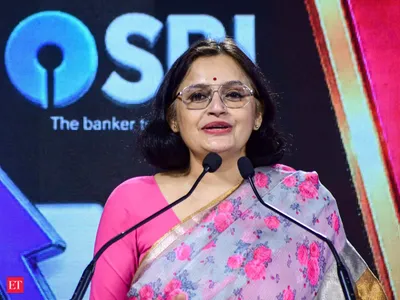
India’s financial transformation has built strong foundations, but the next stage will depend on how deeply its savings, institutions and markets connect with the global economy, Economic Affairs Secretary Anuradha Thakur said on September 24. Household savings still offer significant room to be brought into the formal financial system, she said, while cautioning that establishing a global financial centre would be a long-term process requiring sustained reforms.Addressing the 13th SBI Banking & Economics Conclave 2026 in Mumbai, Thakur said India had already developed several of the institutional and market foundations needed to strengthen its position as a global economic and financial power.She said institutions had become stronger, financial markets were deepening and reforms had improved the environment for businesses to invest and operate.
At the same time, domestic household savings remained an area with considerable potential for greater integration with the financial system.Also read | Rupee may not just stabilise, but appreciate from current levels: RBI Dy Guv Poonam GuptaIndia’s capital markets are also becoming more transparent and increasingly attractive to overseas investors, she said. The GIFT International Financial Services Centre is simultaneously helping establish the foundations for an international financial centre.However, Thakur stressed that financial centres with global influence are built over decades rather than through a single reform or policy intervention.
The experience of established centres such as London and New York showed that their emergence was the result of prolonged institutional development and repeated reforms.The broader lesson, she said, was that economic size alone could not deliver global financial leadership. Countries needed institutions, markets and financial systems that were sufficiently trusted for businesses, investors and other countries to rely on them.Thakur also pointed to a shift in India’s role in global economic governance.
According to her, the country was moving beyond seeking greater representation and was increasingly contributing to the shaping of international economic agendas.Also read | BRICS economies must shape global tax rules for next generation, says FM SitharamanWithin BRICS, India has advanced discussions on practical cross-border mechanisms, including interoperability between payment and messaging systems. Discussions have also covered the use of local currencies for trade settlements and investments, while recognising the national priorities of member countries and the absence of a one-size-fits-all approach.Thakur said India’s growing influence was increasingly visible in its contribution of ideas, policy approaches and institutional reforms to international economic discussions.
The focus, she said, was on helping build a more inclusive and responsive global economic architecture.Strategic resilience has also assumed greater importance as economies deal with heightened global uncertainty and difficult trade-offs, she said.India has sought to strengthen resilience through initiatives in emerging and strategically important sectors, including semiconductors and critical minerals.Thakur said India had demonstrated the ability to withstand external headwinds as a stable economy.
Against a backdrop of global uncertainty, she stressed the need to further strengthen the country’s strategic resilience while continuing the institutional and financial reforms required for greater global integration.