What can Asia, Global South learn from India’s new digital payment fee?
For millions of Indians, buying a cup of chai or groceries from roadside vendors has come to mean reaching for their phones rather than wallets – a habit made possible by a system that has so far charged consumers nothing for such everyday transactions. Now, a decade after the government launched the Unified Payments Interface (UPI), India is asking some merchants to pay for the hugely popular system – raising questions over whether it can preserve the low-cost model that drove its mass adoption...
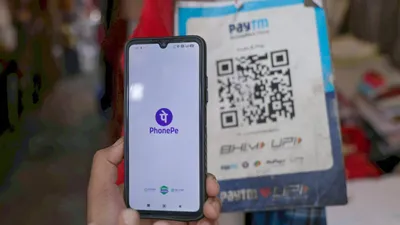
For millions of Indians, buying a cup of chai or groceries from roadside vendors has come to mean reaching for their phones rather than wallets – a habit made possible by a system that has so far charged consumers nothing for such everyday transactions.
Now, a decade after the government launched the Unified Payments Interface (UPI), India is asking some merchants to pay for the hugely popular system – raising questions over whether it can preserve the low-cost model that drove its mass adoption while generating enough revenue to fund its own growth.
Under a new framework, a 0.4 per cent merchant discount rate – a processing fee merchants pay to banks and payment apps when they accept a digital payment from a customer – will apply to transactions above 2,000 rupees (US$21) starting from October 15. The charge has been capped at 300 rupees.
Experts say the roll-out will be crucial in determining whether the system can generate enough revenue to pay for its own maintenance and expansion.
Transactions will remain free for consumers, and 96 per cent of merchant transactions by volume will be unaffected, but some groups, including fuel dealers, oppose the move, fearing it could squeeze their margins.
UPI has anchored a digital revolution in India, helping bring large sections of the population into a formal economy and becoming a backbone of a digital economy in which electronic payments are increasingly integral to everyday commerce.
“The policy direction is economically defensible,” said Vishwanathan Iyer, a finance and accounting professor at Great Lakes Institute of Management in Chennai, highlighting that the payment system is estimated to cost about 200 billion rupees annually.
According to government data, annual transaction volume grew 13,000-fold to 241.62 billion in the financial year that ended in March 2026 from 17.8 million in 2016-17, while transaction value skyrocketed 4,000-fold from 70 billion rupees to 3.14 trillion rupees over the same period.
World’s largest
UPI, operated by the National Payments Corporation of India, is the world’s largest retail fast-payment system by transaction volume, according to a 2025 IMF report.
The government said in a statement on September 15 that the fee would apply only to “specific merchant transactions”, adding that the sum collected would be distributed among payment ecosystem participants, including banks and application providers, to support operations and continued expansion.
Iyer said a predictable revenue stream would give banks and payment companies greater incentive to invest in cybersecurity, fraud detection and dispute resolution – as well as develop the next phase of the system, which would probably involve offering credit lines and expanding cross-border transfers.
The weakness of the move is more in the design, he said. There is no fee for transactions below 2,000 rupees, while a 2,002 rupee transaction immediately attracts one – encouraging split payments.
“A graduated fee on the amount above the threshold would create fewer distortions. The policy is sound, but its design should be reviewed using transaction-level data,” he said.
Business sectors such as fuel dealers have a genuine concern, but the burden for them would effectively be only 0.1 per cent of the transaction, Iyer said.
“Dealer resistance could result in a targeted exemption, compensation by oil marketing companies, or an adjustment to dealer commissions. It is unlikely to derail the entire framework because most UPI transactions remain unaffected,” he said.
Srinivaasan Balakrishnan, director at Delhi-based think tank Indic Researchers Forum, said the UPI system became a global success because “it felt like a public good, not a product”.
“If India wants this rail to remain a digital public good rather than another fee-laden card network, the floor should be raised sharply towards 50,000 rupees or the levy should be paused,” he said.
It would be counterproductive to years of digitisation if the levy made grocery vendors or petrol stations nudge people off UPI in favour of cash, he said.
“Several Asian and Global South systems have studied UPI precisely because it proved you can scale without surrendering the switch to Visa, Mastercard or a foreign boardroom,” he added.
Recouping costs
Rohit Arora, co-founder and CEO of fintech firm Biz2Credit, highlighted that some cost recovery from merchants was inevitable after so many years of free use.
“Capping it and protecting small-ticket, small-merchant transactions is a reasonable way to balance sustainability with UPI’s financial inclusion mandate,” Arora said.
The UPI network is currently live in 11 countries, including Singapore, the UAE, France and Nepal, according to a Reuters report this month.
Arora said that other countries were unlikely to do a “direct copy-paste” of India’s move.
“What they will watch closely is whether India proves a modest merchant fee can coexist with mass adoption, since that’s the template every large real-time payments system eventually has to solve,” he said.
Stuti Datanwala, Digital Payments Consultant and a former executive at Visa and National Payments Council of India, which owns and operates UPI, said the purpose of the move was to make the existing payment ecosystem financially sustainable.
“Several Asian markets already have merchant charges in some form, so they would not necessarily be introducing them because India has done so,” she said.
Indonesia already has a rate structure for its system, depending on merchant category and transaction size. Malaysia’s DuitNow merchant charges depend on the bank or payment provider, with waivers available in some cases.
“Merchant discount rates are charged on person-to-merchant payments there, and in many cases they can be significantly higher than what India is proposing for eligible UPI transactions,” she said.
The underlying issue for other countries was the same as India’s because building and running a secure payment network cost money, she said.
“Countries looking at India’s experience will make their own decisions about how to balance affordability with those costs,” Datanwala said.
“Keeping payments free for consumers, while asking eligible merchants to make a modest contribution, is a sensible approach, as long as small businesses are protected and the charges remain reasonable compared with other payment methods.”