Flood-ravaged Nepal pushes for climate deal with India, China
Nepal’s Prime Minister Balendra Shah proposed a climate alliance with neighbouring India and China, urging action to protect the fragile Himalayan ecosystem after catastrophic flooding across the region. “Glaciers and floods do not travel with stamps and passports,” Shah told world leaders at the United Nations General Assembly in New York. “As an urgent first step, we propose that we establish the Himalaya climate resilience mechanism, led by Nepal, India and China, so the Himalayas become a...
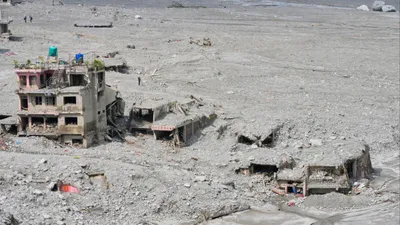
Nepal’s Prime Minister Balendra Shah proposed a climate alliance with neighbouring India and China, urging action to protect the fragile Himalayan ecosystem after catastrophic flooding across the region.
“Glaciers and floods do not travel with stamps and passports,” Shah told world leaders at the United Nations General Assembly in New York. “As an urgent first step, we propose that we establish the Himalaya climate resilience mechanism, led by Nepal, India and China, so the Himalayas become a laboratory of international cooperation rather than a frontier of fragmented information.”
His call follows devastating August 26 floods near the Nepal–China border, triggered by a massive rock-and-ice collapse, which killed at least 1,400 people and wiped out towns, border posts and hydropower plants.
An international study found the catastrophe was primed by a complex web of climate and seismic factors, including record summer heat and thawing permafrost. Shah said that recovery efforts would cost roughly 10 per cent of Nepal’s gross domestic product.
His proposal addresses critical gaps in data-sharing that left frontline mountain communities with virtually no early warning before flash floods struck. Under the framework, the three nations would share satellite telemetry, jointly monitor high-risk glacial lakes and synchronise emergency warnings to protect the roughly 2 billion people who rely on the mountain range for water.
There are global precedents for cross-border sharing of climate data. Eight nations in Europe’s Alpine region pool real-time monitoring to manage mountain hazards, while similar frameworks span Southeast Asia’s Mekong River basin and central Europe’s Danube River to warn downstream communities of impending floods.
China and India “have a particular stake in helping address these challenges, not only as major regional powers, but also because climate and disaster risks in the Himalayas are transboundary”, said Li Shuo, director of the China Climate Hub at the Asia Society Policy Institute.
While both nations offered immediate relief, “that cooperation will need to be sustained and expanded” through practical regional arrangements that complement global climate mechanisms, he said.
Shah also called for reforms to global climate finance, describing existing mechanisms like the UN Loss and Damage Fund as “grossly inadequate” and too bureaucratic. He urged donors to provide direct grant-based support rather than credit that adds to debt burdens.
“When a climate-driven disaster destroys the infrastructure of a poor country, the answer cannot simply be another mega loan,” Shah said.