Merz under pressure as two more German states go to polls
German voters went to the polls today in two state elections that look likely to heap more pressure on struggling Chancellor Friedrich Merz, whose future has been in the balance since the far right's triumph in another regional vote this month.
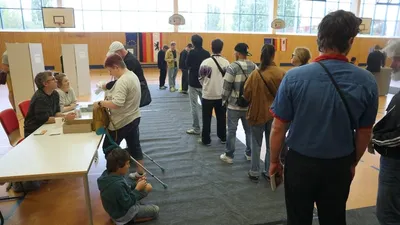
German voters went to the polls today in two state elections that look likely to heap more pressure on struggling Chancellor Friedrich Merz, whose future has been in the balance since the far right's triumph in another regional vote this month.
The elections in Mecklenburg-Western Pomerania, a largely rural state in the formerly communist east, and the capital Berlin, follow the 6 September election in Saxony-Anhalt, where the far-right Alternative for Germany (AfD) came close to the rare feat of winning an absolute majority .
Polls were scheduled to close at 6pm local time, with the first exit polls expected soon after.
Regional elections would not usually draw much interest outside Germany, but the AfD's success in Saxony-Anhalt, which it sees as the first step towards winning federal elections due in 2029, has sent shockwaves through Europe.
In just over a decade, the party, which wants to take tough action to deport foreigners with no right to stay in Germany, restore energy ties with Russia and quit the euro, has transformed itself from a fringe Eurosceptic movement to the country's most popular party.
Opinion polls indicate it is unlikely to repeat its victory in Saxony-Anhalt in either of today's votes. But they are both expected to underscore the advances it has made in recent years and raise fresh questions over the "firewall" strategy, under which the other main parties refuse to enter coalition agreements with it.
For Mr Merz, whose approval ratings have plunged as low as 14%, according to the latest polls, the result was the most recent in a series of blows that have raised doubts in his conservative Christian Democratic Union (CDU) party about whether he can continue to lead.
In Mecklenburg-Western Pomerania, the CDU looks likely to suffer its worst-ever election result, with the most recent opinion poll by the Forschungsgruppe Wahlen on Friday putting it at just 6% and at risk of failing to clear the minimum threshold to enter the state parliament.
Elected last year on a promise of reforms to return Germany's stagnant economy to growth, Mr Merz has struggled to win over voters, compounding resentment over unpopular pension, tax and healthcare reforms with a stream of communication missteps.
For the moment at least, senior CDU figures have rallied behind him, aware that replacing the chancellor - which would in any case be difficult on constitutional grounds - would leave any successor facing the same deep economic problems.
But disillusion with his government has hung over the campaigns in both Mecklenburg-Western Pomerania and Berlin, where voters have focused on issues including soaring energy and housing costs. Mr Merz presented a consumer relief package on Friday that included tax cuts on gas and diesel.
In the rural state of Mecklenburg-Western Pomerania, polls have shown the race narrowing over recent weeks as the centre-left Social Democrats (SPD) have centred their campaign around popular state premier Manuela Schwesig. The Wahlen poll on Friday showed the SPD edging in front of the AfD for the first time in months.
The poll put the SPD on 37%, the AfD on 36%, the far-left Left Party on 9% and the environmental Greens on 5%, just at the threshold for entering parliament. Both parties would be potential coalition partners for Ms Schwesig.
At her closing campaign rally, Ms Schwesig warned of "dark clouds" as she referred to the AfD, calling it a dangerous party.
Wrapping up the AfD's campaign in the state, national party leader Alice Weidel took aim at Mr Merz.
"From next week, the chancellor's tone will become very quiet," she said, telling supporters they had the power to unseat him in today's election.
In Berlin, the Wahlen poll showed the far-left Left Party moving ahead of the CDU, threatening the conservative hold on the mayor's office. Even in liberal Berlin, however, the AfD has made strong gains, moving into third place.
The poll put the Left Party on 22%, the CDU on 20%, the Greens on 15% and the SPD on 12%. The AfD sits on 18%, while the far-left BSW, the only party that has said it might work with the AfD, is just under the parliamentary threshold on 4%.