Events demand a “European Article 4”
The President of the European Commission has put a “European Article 4” on the table, dusting off the old idea of a European Security Council in the process. A defence mechanism, a European trigger for collective response, built to meet crises head-on. The proposal landed last Wednesday, in Ursula von der Leyen’s annual State of […]
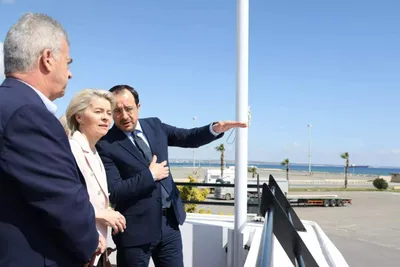
The President of the European Commission has put a “European Article 4” on the table, dusting off the old idea of a European Security Council in the process. A defence mechanism, a European trigger for collective response, built to meet crises head-on.
The proposal landed last Wednesday, in Ursula von der Leyen’s annual State of the Union address, and it’s no coincidence it comes now, against everything unfolding on Europe’s doorstep. Standing before the European Parliament, von der Leyen didn’t mince words: a string of incidents has sharpened fears over Russian hybrid warfare on European soil. Cyberattacks. Sabotage. Airspace violations. And the drone attack attempted on Leipzig/Halle airport this past August.
This isn’t a new idea. The notion of building a proper defence mechanism has been floated before, and gone nowhere, every time.
And every time, the same pattern: these conversations only ever surface when instability and war creep closer to the EU’s own borders.
And so, with all that hanging in the air, von der Leyen stood up to deliver her 2026 State of the Union. She drew up a three-point plan, and it’s the one now setting the EU’s direction.
She talked about a stronger Union: one with real capacity to act alone, fewer strategic dependencies, sharper defence, and crisis-response mechanisms that don’t take weeks to get moving.
This isn’t ambition for its own sake. It’s the bare minimum the moment demands. The EU can’t go on being everyone else’s back-up plan. It is a power in its own right, and it’s time it started carrying the weight that comes with that.
But none of this happens unless the EU cuts the cord, politically and militarily, and starts calling its own shots. And what should sit at the very top of that agenda, in our view, is simple: defending the sovereignty and territorial integrity of its member states. Full stop.
That is what actually protects stability on this continent, which is, after all, the whole point. In a period this fraught, this dangerous, what matters is peace, not war. Stability, not the slide into chaos.
Europe has the muscle. It has what it takes to face down hard situations and see them through. What it doesn’t have, yet, is a plan.