Carlos Queiroz’s real test begins as Ghana face Côte d’Ivoire in Bouaké
Bouaké is where the Carlos Queiroz era gets real. After guiding Ghana to the World Cup knockout stage, Queiroz faces his first competitive test of his second spell today, against Côte d’Ivoire in a difficult AFCON qualifier away from home.
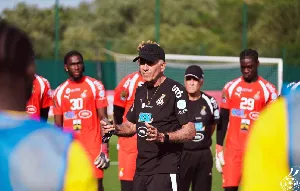
Bouaké is where the Carlos Queiroz era gets real.
After guiding Ghana to the World Cup knockout stage, Queiroz faces his first competitive test of his second spell today, against Côte d’Ivoire in a difficult AFCON qualifier away from home.
The friendlies are gone. Now the decisions carry consequences.
Ghana know that better than most.
The Black Stars missed the 2025 AFCON after a miserable qualifying campaign against Angola, Sudan and Niger, finishing without a win from six games. Three draws, three defeats. It remains a painful reference point as Ghana begin another qualification campaign.
Queiroz’s return was supposed to bring greater structure and consistency. His World Cup team offered glimpses of both.
A different Ghana from the one that missed AFCON
The biggest change under Queiroz was not necessarily in possession or attacking numbers. It was the way Ghana defended.
The Black Stars stayed compact, defended as a unit and were generally disciplined about protecting space. That organisation helped carry them into the knockout stage of the World Cup for the first time since 2010.
It will be tested immediately in Bouaké.
Côte d’Ivoire have the quality to punish a team that loses its shape, particularly in transition. Ghana’s ability to stay compact when possession changes could therefore be more important than how much of the ball they have.
That is where Queiroz’s philosophy meets the reality of competitive football.
The absences change the equation
Queiroz does not have his full World Cup group available.
Jordan Ayew, Mohammed Kudus, Antoine Semenyo and Alidu Seidu are among the notable absentees, removing experience, creativity and attacking threat from the squad.
But the disruption may not be as significant as it first appears.
Queiroz has already established a framework that many of the players understand. Those coming into the team are not arriving to learn an entirely new way of playing. They are stepping into an existing structure.
Ronald Donkor and Rahim Ibrahim are among the players who could benefit from that.
The challenge is whether the collective can compensate for what is missing individually.
Kudus, in particular, is difficult to replace. His ability to carry the ball, create something from nothing and move between lines gives Ghana an attacking dimension that cannot simply be replicated by another player.
Queiroz may instead have to spread that responsibility across the team.
Renard knows the occasion
On the other bench is a coach who understands exactly what this fixture can mean.
Hervé Renard is back in charge of Côte d’Ivoire, having previously led the Elephants to the 2015 AFCON title.
The final was against Ghana.
After 120 minutes without a goal, Côte d’Ivoire won 9-8 on penalties.
Renard therefore knows the history, but this is not simply a replay of 2015. He is also beginning another cycle with Côte d’Ivoire and has brought eight new players into his first squad since returning.
That gives the game an interesting symmetry.
Both coaches know what it takes to navigate major international tournaments. Both are now trying to shape new versions of their teams.
And both will be aware that an opening qualifying defeat immediately complicates the road ahead.
There is rarely much between these teams
Recent meetings suggest another close contest.
Ghana have won once in the last four encounters, Côte d’Ivoire once, with the other two ending in draws. Their most recent meeting, in June 2021, finished 0-0 in Cape Coast.
The history is full of tight games and fine margins.
That could make the opening stages particularly important.
Neither side is likely to want to turn the match into an uncontrolled end-to-end contest. The first goal could change that calculation, but until then, patience and discipline may be the dominant themes.
Queiroz has already described the two teams as possessing similar attacking qualities.
If that holds, the difference may come from how well each side handles the spaces left when possession is lost.