Bab al-Mandeb Strait’s shipping traffic comes to halt amid conflict in Yemen
Escalating conflict off Yemen’s western coast brought shipping traffic through the Bab el-Mandeb Strait to a standstill, threatening a critical chokepoint for global logistics, Anadolu reports. The waterway is facing its quietest days ever, coupled with the crisis in global trade and energy supply due to the blockade of the Strait of Hormuz. The Bab el-Mandeb Strait carries 10% of global maritime trade and accounts for 12% of crude oil shipments.
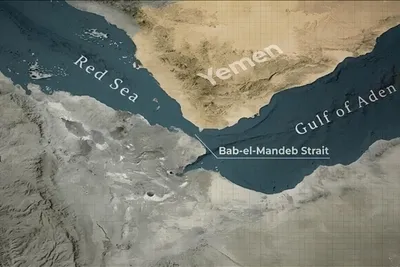
The Bab al-Mandeb Strait. [Photo/AA]
Escalating conflict off Yemen’s western coast brought shipping traffic through the Bab el-Mandeb Strait to a standstill, threatening a critical chokepoint for global logistics, Anadolu reports.
The waterway is facing its quietest days ever, coupled with the crisis in global trade and energy supply due to the blockade of the Strait of Hormuz.
The Bab el-Mandeb Strait carries 10% of global maritime trade and accounts for 12% of crude oil shipments. It has become a weak point in the global supply chain due to the military developments in the region.
The resurgence of conflict in Yemen since July altered the map of control of the region, as the Houthis secured the entire province of Hodeidah and advanced westward to Taiz, seizing Red Sea coastal cities like Mokha and the routes providing access to the Bab el-Mandeb Strait.
After taking over Mokha, the Houthis captured the Hanish archipelago, the Mayun island, and the town of Dhubab, all located around the Bab el-Mandeb Strait.
The capture of the Mayun island, located at the entrance to the western channel, raised security risks to the highest level.
An average of 33 ships transit the waterway each day, but traffic fell 88%, with only four vessels passing through in the past 24 hours, according to International Monetary Fund (IMF) PortWatch data.
READ: Houthis deny threat to Mecca from Yemen
The passage of oil and chemical tankers fell 91%, while only one ship passed in the last 24 hours.
Container ship traffic declined 86% below the average at the same time.
The few ships that were able to transit the waterway were flying the flags of Panama, Singapore, Liberia, and Ethiopia.
The Bab al-Mandeb Strait serves as the most critical southern gateway for goods and oil traveling from Asia to Europe via the Suez Canal, as well as for commodities bound for Asia.
Global shippers and energy firms are losing this safe passage amid escalating military tensions and continue to reroute their vessels around the southern tip of Africa’s Cape of Good Hope.
Circumventing the African continent extends voyage durations by weeks and causes freight and insurance costs to surge.
The Houthi’s intensifying pressure on the strait could lead to a new wave of global oil shocks, analysts say.
The bottleneck in the region is affecting alternative bypass plans for global energy routes.
Saudi Arabia is able to transport its crude oil directly to Red Sea ports by relying on its East-West Crude Pipeline, bypassing the Strait of Hormuz, but oil tankers loading cargo at these ports and heading south toward global markets have to transit the Bab al-Mandeb Strait.
Blockading the strait would threaten the viability of the route that bypasses the already conflict-ridden Strait of Hormuz.