Charlie Kirk assassination: The security failures alleged by his family, explained
The potential civil case is separate from the criminal prosecution of Tyler Robinson, who is accused of shooting Kirk from the roof of the university's student resource center.
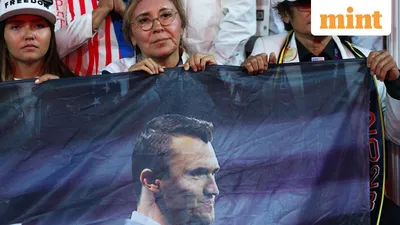
The family of conservative activist Charlie Kirk has accused Utah Valley University (UVU) and Utah officials of failing to take basic security precautions before Kirk was fatally shot at a campus event on September 10, 2025. In a notice of claim filed ahead of a potential wrongful-death lawsuit, the family's attorneys described a series of alleged “reckless decisions” that they say left Kirk exposed to a rooftop shooter.
The notice points to concerns over rooftop access, police staffing, surveillance, screening, perimeter security and emergency medical response. UVU has acknowledged receiving the notice but has not accepted the family's allegations. The university says it will address the matter through its established legal processes.Here is what is known about the security arrangements, what Kirk's family alleges and what remains disputed.What security measures were in place?
Kirk was speaking in an outdoor courtyard at UVU in Orem, Utah, before an audience of about 3,000 people.The event was surrounded by university buildings, including the student resource center. According to the family's notice, Kirk was shot from a rooftop more than 400 feet away.Campus police were present, with then-Chief Jeffrey Long saying six officers staffed the event. They coordinated with Kirk's eight-person private security team, according to Long's post-shooting account.The university later said it was expanding its police force.No rooftop securityThe most significant issue raised by the family concerns access to rooftops overlooking the event.According to the notice, Turning Point USA, the organization that hosted Kirk's appearance, had warned university police about the security risks posed by nearby rooftops.The notice says Police Chief Jeffrey Long responded to a Turning Point USA staff member in a text message:“I got you covered.”
The family alleges that despite the warning, university police failed to control access to the rooftop from which Kirk was eventually shot.No drone surveillanceThe event did not use a drone to monitor rooftops and other areas around the gathering, according to the AP review.The family argues that surveillance of elevated positions could have helped identify a potential threat before the shooting.No bag checks or metal detectorsThere were also no bag checks or metal detectors at the event, according to the AP review.The family cites the lack of screening as another indication that officials failed to adopt adequate precautions for a high-profile event attended by thousands of people.No secure perimeterThe family's notice alleges that officials failed to establish a secure perimeter around the event.That meant people could move through areas around the gathering, including locations that provided elevated views of the courtyard, according to the family's account.Police staffing questionsThe family also questions whether enough law enforcement officers were assigned to protect the event.Long said six campus police officers were present and working with Kirk's private security detail.The family's notice, however, argues that staffing was below recommended levels for an event of that size.The exact adequacy of the staffing — including what level of police presence was required and what responsibilities were assigned to campus versus private security — remains an issue that could be examined in any lawsuit.Why is the rooftop allegation important?
The family argues that the possibility of a rooftop attack should have been given particular attention because of the attempted assassination of then-presidential candidate Donald Trump in July 2024. Trump, a close political ally and friend of Kirk, was wounded when a gunman fired from a rooftop at a campaign rally in Butler, Pennsylvania.Kirk's attorney, D. Loren Washburn, cited that earlier attack in the notice, arguing that the risk of a rooftop shooter should have been especially apparent when planning Kirk's event.The family therefore frames the rooftop issue as more than a general security concern: it argues that officials had received a specific warning about the buildings overlooking the event and had a recent precedent for rooftop attacks.What has the university said?
UVU has not publicly agreed with the family's characterization of the security arrangements.A university spokesperson said the school was aware of the notice of claim and would handle it through its established procedures.“ Our focus remains on supporting our campus community,” UVU spokesperson Sharon Turner said.The Utah Attorney General's Office has said it does not comment on potential litigation.UVU had also said after the shooting that it was expanding its police force.What about the emergency response?
The family's allegations extend beyond security before the shooting.The notice says there were no first responders immediately available after Kirk was shot and argues that he was taken to a nearby hospital in a private vehicle rather than an ambulance.The family contends that emergency medical planning should have been part of the event's preparation.Was UVU legally negligent? The family's notice is an allegation and a precursor to possible litigation.
It does not itself establish that UVU or Utah officials were legally negligent.A court would ultimately have to consider whether officials had a legal duty to take the measures identified by the family, whether that duty was breached and whether any breach contributed to Kirk's death.Would additional security have prevented the shooting? The family argues that better rooftop security and other precautions could have prevented the attack.That is a key causation question that would need to be supported by evidence if the case proceeds.