Moscow’s Ceasefire Bingo Card – What Might the Kremlin Say to Ukraine’s Unconditional Ceasefire?
“It’s Ukraine’s fault,” “Good idea but…” “What if we try something else?” After Ukraine reiterates its plan for an unconditional ceasefire, here’s a list of potential responses from Moscow based on its past remarks on similar proposals.
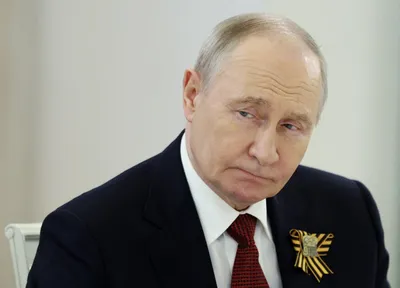
In brief: “It’s Ukraine’s fault,” “Good idea but…” “What if we try something else?” After Ukraine reiterates its plan for an unconditional ceasefire, here’s a list of potential responses from Moscow based on its past remarks on similar proposals.
Ukraine unveiled an unconditional ceasefire proposal on Wednesday, Sept. 23, backed by 50 countries in a joint statement.
Now the question is – how will Russia respond? Russia’s foreign minister Lavrov has already ruled out a ceasefire during peace talks – but how will Moscow react to an unconditional ceasefire as a whole?
Follow our coverage of the war on the @Kyivpost_official .
Instead of guessing what Moscow will say, here’s a bingo card of what it might say, based on past statements on similar proposals.
Or it could be a combination of different points; who knows.
Russia has in the past moved the starting date earlier, then blamed Ukraine for violating a ceasefire before it was agreed.
The more recent example came in the form of Trump’s energy truce, when he claimed both Kyiv and Moscow had agreed to it when, in fact, they had not. Before Putin’s spokesperson Peskov snubbed it as a “ very good idea ” a day later, he also accused Ukraine of attacking Russian energy facilities.
But there was never an energy truce, not to mention that Russia also hit two gas stations in Kyiv the same morning.
Similar patterns were observed in most ceasefire agreements, with both Kyiv and Moscow accusing each other of violations, including the so-called energy truce in March 2025, when Moscow said Ukraine had violated it by moving the starting date , or during Moscow’s May 9 parade , when no one really understood what ceasefire meant on the front.
That’s why the “unconditional” part of the latest proposal matters.
Here comes the Putin classic – saying yes and meaning no.
One such case happened in March 2025, when Trump pushed for a 30-day ceasefire after his return to office.
In response to that proposal, Putin said the 30-day ceasefire proposal is “ good and we absolutely support it but there are issues that we need to discuss” before questioning the effectiveness of the proposal, naming a number of “conditions that need to be studied,” such as the enforcement of the ceasefire along the front.
The result was the 30-day energy truce – see how it worked out in the previous section.
A short recap – in the summer of 2025, the EU issued an ultimatum to Putin to move toward an unconditional 30-day ceasefire or face massive sanctions. Putin countered with a plan to resume what he called the Istanbul format, based on early negotiations in 2022 during the first days of the full-scale invasion.
Putin was a no-show and sent a historian in his place who reportedly threatened the Ukrainian delegation . The format, including multiple negotiations, resulted in prisoner swaps but not the ceasefire envisioned.
And good for Putin – without the promised massive sanctions either.
Another example would be August 2025’s Alaska summit, when Trump threatened Putin with massive secondary tariffs, with the two ultimately agreeing to a summit in Alaska instead that earned Putin first-class treatment on US soil after being ostracized since 2022.
Again, no sanctions and tariffs as promised. A win-win for Putin.
Sometimes it’s as easy as blaming Ukraine for impeding the process without saying how.
“Representatives of the Kyiv regime, the leadership in Kyiv, speak of peace and propose resuming so-called negotiations, but themselves commit such crimes, doing everything to ensure that there is no peace and no negotiations,” Putin told Russia’s Military-Industrial Commission on Sept. 18.
Which raises the question – what exactly should Ukraine do then?
Russia also has a habit of highballing other parties in negotiations, setting conditions that some might consider outrageous.
If the opponents relent and cave in – that’s a win. If they don’t? Blame them for failing to meet the conditions.
A recurring example would be asking Zelensky to come to Moscow for a Putin meeting to settle things once and for all. Another would be to tell Kyiv to withdraw from territories it still controls – that Moscow failed to win for 12 years – as a precondition for peace talks.
Again, this is why the “unconditional” part of the new proposal matters.
If only we had heard this, then perhaps thousands, if not millions, of Ukrainians and Russians would still be alive today.
The views expressed in this opinion article are the author’s and not necessarily those of Kyiv Post.
Leo Chiu is a journalist and editor based in Eastern Europe since 2015. He has witnessed two presidential elections in Belarus and traveled widely to conflict zones and contested regions, producing reporting that bridges the gap between major developments and local realities.