Diesel prices are surging. These shippers say Tesla’s electric trucks can save money over time
Tesla just landed the largest-ever U.S. order for electric heavy-duty trucks: 2,500 Tesla Semis, which would double the number of Class 8 electric trucks on the road. A coalition of companies including Microsoft and PepsiCo is behind the order, which Tesla expects to deliver in 18 months. A financing partner is purchasing the trucks and will lease them to shippers. “The real goal here is to help bring down that upfront price barrier,” says Jacob Richard, who manages the trucks project at Catalyst Mobility , a nonprofit working on the program, called the Zero-Emission Truck Shipper-Carrier Alliance Leading Electrification. “We’re doing that by aggregating demand across multiple shippers.” Every heavy-duty electric truck manufacturer selling in the U.S., including Volvo and Kenworth, participated in the group’s request for proposals. Tesla won based on a combination of price, range, charging capacity, and production capacity. The nonprofit declined to share the cost of each truck, though it says that after three years of use, the savings on fuel and maintenance will make the trucks cheaper than diesel. The news comes at a time when diesel prices are surging . Diesel went from an average of around $3.75 a gallon in February to more than $6.50 a gallon this week, thanks in large part to the Iran war . That’s likely to push up the cost of everyday goods as transportation gets more expensive. While the companies behind the new truck order were motivated by climate goals, they could also save money after recouping the up-front costs. The nonprofit says that it’s now seeing increased interest in electric trucks from other companies because of diesel prices. Electric trucks can’t fully replace diesel trucks now, even if the costs are dropping. Because of limited battery range, the technology currently makes sense at ports and for local or short regional deliveries. “We really find the 150-mile to 300-mile daily route is the sweet spot, and today’s models can meet that,” Richard says. Long-distance travel will require either improved driving range or different fleet models (such as those utilizing battery swapping ). More charging stations are also needed. Still, a surprising number of deliveries happen on short trips. By one estimate, more than half of current heavy-duty trucking routes could be electrified with current technology. The alliance of shippers behind the new order plans to use the trucks at 10 hubs, including three locations each in California and Texas, as well as ones in Atlanta, Chicago, New York City, and Seattle. The locations were chosen based on where the economics made sense, Richard says, and where charging infrastructure was already in place. IMC Logistics, a large drayage operator, also said this week that it was ordering 50 Tesla Semis to use in Southern California at the port and to make deliveries to inland warehouses. The Tesla Semi—which launched in 2017, but just began high-volume production earlier this year—now comes with a range of either 325 miles or 500 miles. The company’s new Nevada factory, which officially opened today, is designed to eventually roll out 50,000 of the trucks a year.
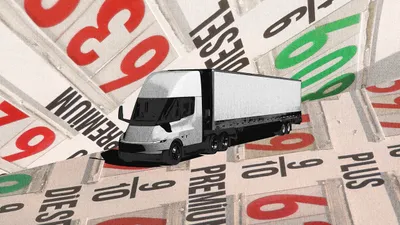
Tesla just landed the largest-ever U.S. order for electric heavy-duty trucks: 2,500 Tesla Semis, which would double the number of Class 8 electric trucks on the road.
A coalition of companies including Microsoft and PepsiCo is behind the order, which Tesla expects to deliver in 18 months. A financing partner is purchasing the trucks and will lease them to shippers.
“The real goal here is to help bring down that upfront price barrier,” says Jacob Richard, who manages the trucks project at Catalyst Mobility , a nonprofit working on the program, called the Zero-Emission Truck Shipper-Carrier Alliance Leading Electrification. “We’re doing that by aggregating demand across multiple shippers.”
Every heavy-duty electric truck manufacturer selling in the U.S., including Volvo and Kenworth, participated in the group’s request for proposals. Tesla won based on a combination of price, range, charging capacity, and production capacity.
The nonprofit declined to share the cost of each truck, though it says that after three years of use, the savings on fuel and maintenance will make the trucks cheaper than diesel.
The news comes at a time when diesel prices are surging . Diesel went from an average of around $3.75 a gallon in February to more than $6.50 a gallon this week, thanks in large part to the Iran war . That’s likely to push up the cost of everyday goods as transportation gets more expensive. While the companies behind the new truck order were motivated by climate goals, they could also save money after recouping the up-front costs. The nonprofit says that it’s now seeing increased interest in electric trucks from other companies because of diesel prices.
Electric trucks can’t fully replace diesel trucks now, even if the costs are dropping. Because of limited battery range, the technology currently makes sense at ports and for local or short regional deliveries. “We really find the 150-mile to 300-mile daily route is the sweet spot, and today’s models can meet that,” Richard says. Long-distance travel will require either improved driving range or different fleet models (such as those utilizing battery swapping ). More charging stations are also needed.
Still, a surprising number of deliveries happen on short trips. By one estimate, more than half of current heavy-duty trucking routes could be electrified with current technology.
The alliance of shippers behind the new order plans to use the trucks at 10 hubs, including three locations each in California and Texas, as well as ones in Atlanta, Chicago, New York City, and Seattle. The locations were chosen based on where the economics made sense, Richard says, and where charging infrastructure was already in place.
IMC Logistics, a large drayage operator, also said this week that it was ordering 50 Tesla Semis to use in Southern California at the port and to make deliveries to inland warehouses.
The Tesla Semi—which launched in 2017, but just began high-volume production earlier this year—now comes with a range of either 325 miles or 500 miles. The company’s new Nevada factory, which officially opened today, is designed to eventually roll out 50,000 of the trucks a year.