Uncertainty looms over PM Modi’s Miami G20 visit as US Russia sanctions bill casts shadow on Delhi-Washington ties
New Delhi: Prime Minister Narendra Modi ’s proposed visit to Miami for the G20 summit has come under a cloud of uncertainty after New Delhi on Thursday warned that the passage of the Sanctioning Russia and Iran Act by the American Congress could have implications for bilateral relations between India and the United States.
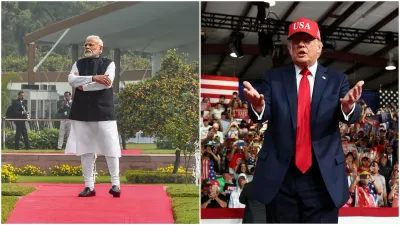
New Delhi: Prime Minister Narendra Modi ’s proposed visit to Miami for the G20 summit has come under a cloud of uncertainty after New Delhi on Thursday warned that the passage of the Sanctioning Russia and Iran Act by the American Congress could have implications for bilateral relations between India and the United States.
A source in New Delhi told DH that India would carefully assess the state of its relations with the US before deciding not only on the proposed bilateral component of the prime minister’s visit, but also on his participation at the G20 summit, which would be hosted by President Donald Trump in Miami, Florida, on December 14 and 15.
US passes Russia sanctions bill: India vows to protect energy security, says tariffs could hit US ties
Trump’s actions over the next three months would decide the fate of the proposed trade agreement between India and the US, as well as the future course of bilateral relations, the source added, signalling New Delhi’s intent to put the onus of keeping ties on track on Washington.
“India remains firmly committed to ensuring energy security for its 1.4 billion people. It will continue to do so through diversified sourcing and on the basis of evolving market dynamics,” the Ministry of External Affairs stated in New Delhi just hours after the US House of Representatives passed the Lindsey Graham Sanctioning Russia and Iran Act.
The legislation, earlier passed by the US Senate, gives the American President authority to impose tariffs up to 100 per cent on major buyers of oil and gas from Russia, including potentially China and India, to squeeze the flow of funds to the former Soviet Union nation and to make it difficult for President Vladimir Putin to continue the war in Ukraine.
India reacted by reiterating “its determination to take all necessary measures to protect its trade and economic interests”.
New Delhi also underlined that India had discussed the issue of the Sanctioning Russia and Iran Bill with the US at high levels in recent months. India had clearly articulated in its engagements with the US the potential implications of the legislation, not just for the bilateral relationship but also for the international energy market, the MEA stated in New Delhi.
“India is the world’s fastest-growing major economy and its third-largest energy consumer. Yet the average Indian consumes less than one-third of the global average and one-tenth of the average American,” Vinay Mohan Kwatra, New Delhi’s envoy to Washington, D.C., posted on X, adding: “Our energy needs will, and must, grow.”
'Appeasement never pays': Congress jabs govt as US passes Russia sanctions bill
India, however, is likely to tread cautiously rather than react to the new US legislation knee-jerk. Another source told DH that New Delhi would wait to see whether the US president would use the power granted by the new law to impose tariffs on India.
Commerce Minister Piyush Goyal is likely to visit the US towards the end of this month. He is likely to meet US Trade Representative Jamieson Greer and Secretary of Commerce Howard Lutnick. External Affairs Minister S Jaishankar may also visit the US by the end of next month. He is also expected to meet his counterpart, Secretary of State Marco Rubio, during his visit.
Rubio met Modi in New Delhi on May 23 and conveyed the US president’s invitation to the prime minister to visit the White House “in the near future”.
Officials from the two governments have since explored the possibility of Modi visiting Washington, D.C., and meeting Trump before travelling to Miami to attend the G20 summit on December 15 and 16. The two sides have also discussed including the much-awaited trade agreement in the list of deliverables for the proposed Modi-Trump meeting, subject to concluding negotiations.
New Delhi, however, also conveyed to the Trump Administration in Washington, D.C., that any new tariff hike could derail negotiations on the India-US trade deal.
Modi had met Trump at the White House a few weeks after he returned as the 47th US president on January 21, 2025.
Trump’s tariff war against India, his move to force India to stop buying oil from Russia, his repeated claims – despite denials from New Delhi – about mediating a truce between India and Pakistan to end the cross-border military flare-up between the two South Asian neighbours, and his bonhomie with the civil-military leaders of Pakistan stressed New Delhi’s ties with Washington, D.C., over the past 20 months.
Trump had invited Modi to have a brief stopover in Washington, D.C., while flying from Alberta, Canada, where both had attended the G7 summit in June 2025, to Zagreb in Croatia. But with Trump then hosting Pakistan Army chief, Field Marshal Asim Munir, whom New Delhi had accused of provoking the April 22, 2025, terrorist attack in Jammu and Kashmir with an incendiary speech, the prime minister had turned down the invitation from the US president.