Bentley unveils first EV, the Torcal, at less than half the price of Ferrari’s Luce
The electric SUV is Bentley’s most affordable model and is aimed at attracting younger and first-time customers to the luxury marque.
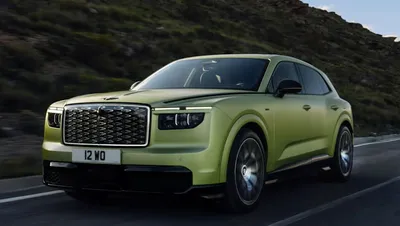
The electric SUV is Bentley’s most affordable model and is aimed at attracting younger and first-time customers to the luxury marque.
Bentley has unveiled its first electric car at a price expected to be less than half the amount of Ferrari’s rival offering, as the UK luxury carmaker bets on the new SUV to attract younger and first-time customers.
The Torcal, which has a starting price of £173,300 (US$229,490; S$293,798) and a range of up to 600km, will be the fourth and most affordable model in Bentley’s line-up as the luxury car industry gradually expands beyond petrol and hybrid models.
In May, Italian rival Ferrari launched its all-electric Luce at a starting price of €550,000 (£472,000; US$626,150; S$801,603) and a range of 530km. Compared with the Luce’s polarising design from former Apple designer Sir Jony Ive, Bentley’s chief executive Frank-Steffen Walliser said everything about the Torcal, from the design, feel and driving experience, would be “all Bentley”.
“My gut feeling was always, timing-wise, it could be perfect,” Walliser told the Financial Times (FT). “I would say it’s also beneficial not to be the first.”
A post shared by Bentley Motors (@bentleymotors)
The Torcal is smaller than the Bentayga, which was its first SUV launched in 2015, but is its most powerful car, featuring a muscular design and a front grille with the company’s signature diamond pattern.
Instead of recreating the V8 engine noise, the EV has a propulsion sound handcrafted by musicians with a unique blend of sounds from percussion, crystal glass, birds and the tapping of leather.
The Volkswagen-owned luxury brand also said it had completed a £350 million investment to design and build the Torcal at its plant in Crewe, bringing the total investment in the UK automotive sector to more than £1 billion — including investment pledges of a combined £670 million by McLaren and Nissan in the past week. The investment will support 4,000 jobs in the UK.
The EV launch comes at a challenging period for Bentley as it struggles with slowing demand in China, the fallout from the Middle East conflict and higher US tariffs. As with the broader VW group, Bentley has slimmed its workforce as profits and vehicle deliveries have declined.
“It’s serious,” Walliser said. “We have to bring back the competitiveness. We have to be quick . . . we have to work harder.”
In recent years, Bentley has significantly scaled back its ambitious electric roadmap, under which it had envisaged launching a new EV every year from 2025 to the end of the decade.
The luxury sector remains deeply divided on the pace of the electric transition, with Lamborghini, which is also part of the VW group, abandoning its plan to launch its first EV by 2030. McLaren has pivoted its strategy to focus on launching its first hybrid SUV.
But Walliser said the Torcal’s launch was an “important milestone” that would add to its existing fleet and give consumers every powertrain option, from the internal combustion engine, hybrids to EVs. “It’s not replacing one Bentley with another Bentley,” he added.
Roughly half of the early interest in the Torcal came from new customers, he said, adding he wanted to broaden Bentley’s appeal to a younger generation in their forties.
While Bentley has not disclosed a sales target for its EV, Walliser said it expected demand for the Torcal to be on par with its Continental and Bentayga models, with SUV sales likely to make up more than half of its total sales. Production of the model, which can be charged from 10 per cent to 80 per cent in 16 minutes, will start in the second quarter of 2027.
He declined to comment on the EV’s margin with its affordable pricing but added the company can benefit from using VW’s supply chains: “Our reason for existing is making money.”
While Bentley’s traditional client base is still largely made up of wealthy motoring enthusiasts, demand for luxury EVs is emerging in Europe and among US tech entrepreneurs, especially amid a rise in fuel prices.
The sector’s cautious foray into EVs comes as it faces competition from Chinese rivals seeking more premium prices for their electric models, even though non-western manufacturers have never cracked the luxury segment in the past.
“Luxury comes from the heart of Europe,” Walliser said, adding that European luxury groups were known for a history of heritage and craftsmanship.
By Kana Inagaki © 2026 The Financial Times.
This article originally appeared in The Financial Times.
A single handpicked story that we think you shouldn't miss. Just one a day.