Bashir, royalty and childhood trauma: the revelations from Charles Spencer’s book
You’ve seen all the headlines, but what is Charles Spencer’s book about the late Princess really like?
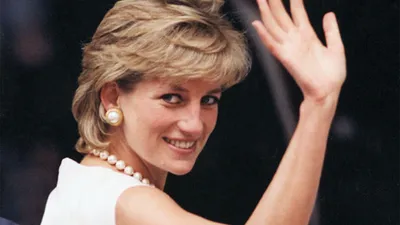
Charles Spencer’s tribute to his sister on September 6, 1997 is regarded as one of the great eulogies of modern times. His lyrical introduction – and the first arrow aimed at the Royal Family – the removal of her HRH: “Diana was the very essence of compassion, of duty, of style, of beauty. All over the world she was a symbol of selfless humanity who needed no royal title to continue to generate her particular brand of magic.”
His second arrow – more pointed and oft-repeated – but how odd to suggest that only Spencer blood flowed through the young princes’ veins: “I pledge that we, your blood family, will do all we can to continue the imaginative way in which you were steering these two exceptional young men so that their souls are not simply immersed by duty and tradition but can sing openly as you planned.”
He ended, his voice breaking: “My sister, the unique, the complex, the extraordinary and irreplaceable Diana, whose beauty, both internal and external, will never be extinguished from our minds.”
As he finished, what sounded like rain was in fact applause from the thousands outside the Abbey, rolling down the aisles and along the pews all the way to the High Altar – only the senior Royals remained unmoved.
All but three decades on, Charles Spencer sure is singing openly as his historic address shapes and frames the eulogist’s memoir of his sister – providing headings to each of his 30 chapters. Dedicated to “all those who have lost a sibling”, he chose his title as “she never had a chance to utter her own swan song”. It might be natural to say “Spare me, not another Diana biography” – but no one knew her better than he.
A respected historian with a handful of biographies of his Marlborough and Stuart ancestors, the Earl writes vividly and well. His account of their shared childhood (“Carlos” and “Duch”) is fascinating. The Guardian’ s critic was struck by his last book – the grimmest memoir, A Very Private School (2024) – the “vehemence and the therapeutic purpose it serves in allowing Spencer to “reclaim” his childhood, but the authenticating detail of his memory – it’s as if trauma has frozen these in time.”
It is said that revenge is a dish best served cold and there are flashes of icy fury in defence of his wronged sister, but Penguin’s ingenious marketing and sensational pre-publication of extracts have skewed the narrative; Spencer’s criticism of his former brother-in-law is repeated, but not relentless.
While he acknowledges that as someone who has taken four countesses and produced seven children, he is no model of constancy, the chief source of his censure is that Prince Charles always loved another. He even told Diana just before they wed that he was happy to marry her but did not love her. And despite half-hearted attempts to call it off, she still swept down the aisle for the Wedding of the Century.
Beneath the genial public image, we have seen the new King venting his spleen (a spat with pens), and the turnover of his courtiers and staff must rival the NHS; so is it so unlikely that, overcome by grief, shock and guilt, he would hit out hysterically at being challenged and claim that his ex-wife would soon be forgotten?
That said, although the Earl gives it no credence, it was pretty gratuitous to repeat Diana’s unhinged revelation that she was divorcing the prince because “he was in love with his valet”.
He repeats what we now know of the journalist Martin Bashir’s dishonesty and manipulation that led to the infamous 1995 Panorama interview and confirms that it made divorce inevitable, but he believes that without it, the five years of separation may have continued “with grown-up compromises”. He had warned Diana against Bashir, who then went behind the Earl’s back and stitched up the interview with the sombre, kohl-eyed victim.
There are some revelations - that the old Earl had romanced Princess Elizabeth until Lord Mountbatten put a stop to it; Diana’s doctor was dismissed and replaced by the Queen’s physician who did nothing for her anorexia; her trips to the cliffs at Beachy Head to end it all; the Queen offering to reinstate the dead Princess’s HRH; and that Charles’ loathed stepmother Raine Spencer sold a fifth of the 500-year-old house’s contents during her 16-year reign at Althorp. He could not understand Diana’s late camaraderie with Raine, who engineered her introduction to Dodi Al-Fayed.
He cannot understand either why Charles walked behind the casket of his ex-wife. The prince said it was to support his sons, but the Earl was appalled that his teenage nephews were expected to walk at all – a mile of sobs and wailing as the Abbey’s tenor bell tolled 30 times. But his ire is chiefly directed at the paparazzi and the tabloids. Yet, 30 years on, they continue to click and slander.
In all, as someone who has often been mistaken for Charles Spencer, it is tempting for this reviewer to be unduly sympathetic. But as a sibling’s unghosted tribute to a 20th-century phenomenon, this is a plucky and plausible achievement.
Swan Song: Diana, My Sister by Charles Spencer (Penguin Random House, $59.99) is out now.
You have reached your maximum number of saved items.
Remove items from your saved list to add more.