Ukraine’s wheat exports plunge, deepening global food security risks
The bloody war that has been raging on Ukrainian soil for a long time is a major crisis that has fundamentally shaken global economic and social resilience in the 21st century and set geopolitical fault lines in motion. Although the sounds of gunfire on the battlefield echo across Eastern Europe, its economic and social consequences extend thousands of kilometers away and are being deeply felt in the deserts of Africa, the densely populated neighborhoods of the Middle East, and the developing countries of Latin America
The bloody war that has been raging on Ukrainian soil for a long time is a major crisis that has fundamentally shaken global economic and social resilience in the 21st century and set geopolitical fault lines in motion. Although the sounds of gunfire on the battlefield echo across Eastern Europe, its economic and social consequences extend thousands of kilometers away and are being deeply felt in the deserts of Africa, the densely populated
neighborhoods of the Middle East, and the developing countries of Latin America. At the center of this crisis is one of the most critical and sensitive issues: global food security and, in particular, the serious collapse in wheat supplies.
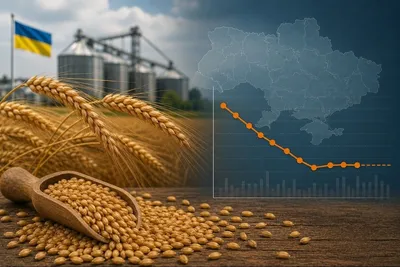
Recent statistical indicators provide grounds for sounding the alarm in global grain markets. According to data from Ukraine’s Ministry of Agriculture, the country’s total grain exports in the current season have declined by 22 percent compared with the same period last year, falling to 4.67 million tons. An even more alarming picture can be seen in wheat exports, which are directly linked to a staple food for human consumption: Ukraine’s wheat
exports have fallen sharply by approximately 44 percent, declining to just 2.33 million tons. A similar trend has been observed in barley exports, which have halved to 420,000 tons. Even the doubling of corn exports to 1.84 million tons does not alter the overall picture, because corn is primarily directed toward the animal feed industry and cannot replace wheat, a strategically important social commodity.
The main factors behind this sharp decline are the bombing of areas where wheat is produced and the paralysis of logistics networks and strategic infrastructure. Ukraine’s main deep-water ports on the Black Sea, including Odesa, Chornomorsk and Pivdennyi, have been seriously damaged by military attacks and bombardments and have largely suspended their operations. At present, Ukraine is able to realize only 40 percent of its potential agricultural
exports. The blockade of the maritime corridor is increasing pressure on alternative land routes, which in turn raises transportation and insurance costs several times over, making the final price of the product excessively high.
It is precisely at this point that the ruthless global face of the war becomes apparent: the closure of Ukrainian ports and the near-halving of wheat exports are not hitting Western countries the hardest, but rather less-developed and poorer states. The African continent, particularly North and East African countries such as Egypt, Sudan, Somalia, Kenya and Algeria, have historically been critically dependent on Black Sea wheat.
The sharp decline in exports is fueling inflation in these countries while also directly increasing the risk of mass hunger and social unrest. For countries such as Egypt, where bread is distributed to the population through state subsidies, rising wheat prices can mean the collapse of the state budget. In Somalia or Sudan, meanwhile, this is a matter of whether thousands of people will survive.
The situation is further complicated by the fact that a large
share of the humanitarian wheat aid sent by the UN World Food
Programme (WFP) to less-developed countries originates from
Ukraine. Disruptions in supply chains increase the costs of
humanitarian missions and prevent aid from being delivered on time.
Similar pressures are also being felt in Latin America and the
Middle East: importers have to turn to more distant and expensive
alternatives to fill the gap created in the grain market. This, in
turn, leads to chain inflation globally and deepens poverty.
International financial institutions, recognizing the scale of
the global threat, are attempting to take certain steps. The World
Bank’s allocation of a $250 million financial package to Ukrainian
farmers and the agricultural sector, along with the government’s
efforts to support producers through its “5-7-9%” preferential
lending program, are aimed at preventing the agricultural sector
from being completely crippled. However, these financial injections
merely alleviate the symptoms temporarily; they do not treat the
disease itself.
It must be emphasized that the Ukraine-Russia war is not merely
a territorial conflict, but also a test of global resources and
humanitarian security. Every port struck in the Black Sea and every
ship subjected to a blockade is reflected thousands of kilometers
away as hunger and deprivation in a poor African village. If the
international community cannot fully guarantee the security of
grain corridors and remove the logistical blockade, the indirect
human toll caused by the war could reach a far more devastating
scale than the losses on the battlefield.
Here we are to serve you with news right now. It does not cost much, but worth your attention.
Choose to support open, independent, quality journalism and subscribe on a monthly basis.
By subscribing to our online newspaper, you can have full digital access to all news, analysis, and much more.
You can also follow AzerNEWS on Twitter @AzerNewsAz or Facebook @AzerNewsNewspaper