Saudi Arabia’s return to Hormuz puts oil transfer network to the test
For months, Saudi Arabia had been eschewing the Strait of Hormuz, but the kingdom has now resorted to ship-to-ship transfers through the vital waterway.
 Hormuz Closure Chaos$HCC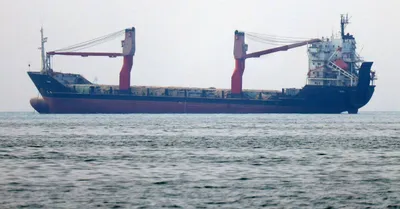
AL-MONITOR is an award-winning media outlet covering the Middle East, valued for its independence, diversity and analysis. It is read widely by US, international and Middle East decision makers at the highest levels, as well as by media, thought and business leaders and academia.
By becoming an AL-MONITOR subscriber, you drive our team’s rigorous and independent journalism spanning the Middle East.
Ship-to-ship (STS) transfers in the Gulf of Oman have reportedly reached their limits after an attack on Saudi Arabia’s East-West Pipeline forced the kingdom to send more crude through the Strait of Hormuz.
What happened: According to shipping analytics firm Kpler, STS transfers of liquid cargo in the Gulf of Oman averaged 3.7 million barrels per day from the start of the war on Feb. 28 through Sept. 21, up from 160,000 barrels per day in 2025. The pace accelerated in September, averaging 8.2 million barrels per day from Sept. 1 to Sept. 24.
"Our understanding is that the region is gradually meeting its current operational limits, also evident by the sheer scaling of operations," Panagiotis Krontiras, tanker freight analyst at Kpler, told Al-Monitor.
An STS transfer involves moving liquid cargo, such as crude oil or natural gas, directly between two merchant vessels positioned side by side at sea using connected hoses. Since the US- Israel -Iran conflict began, this method has served as a wartime workaround. Smaller shuttle tankers brave the high-risk Strait of Hormuz to unload their cargo onto larger vessels waiting in safer waters, such as the UAE’s Fujairah and Oman’s Sohar ports, allowing the initial ships to quickly return for more oil.
To reduce the risk of attack, the shuttle tankers often turn off their transponder systems to avoid detection.